
Sharpening the Tools: What Three Years of CBET Are Telling Us
How often do you sharpen your tools of work?
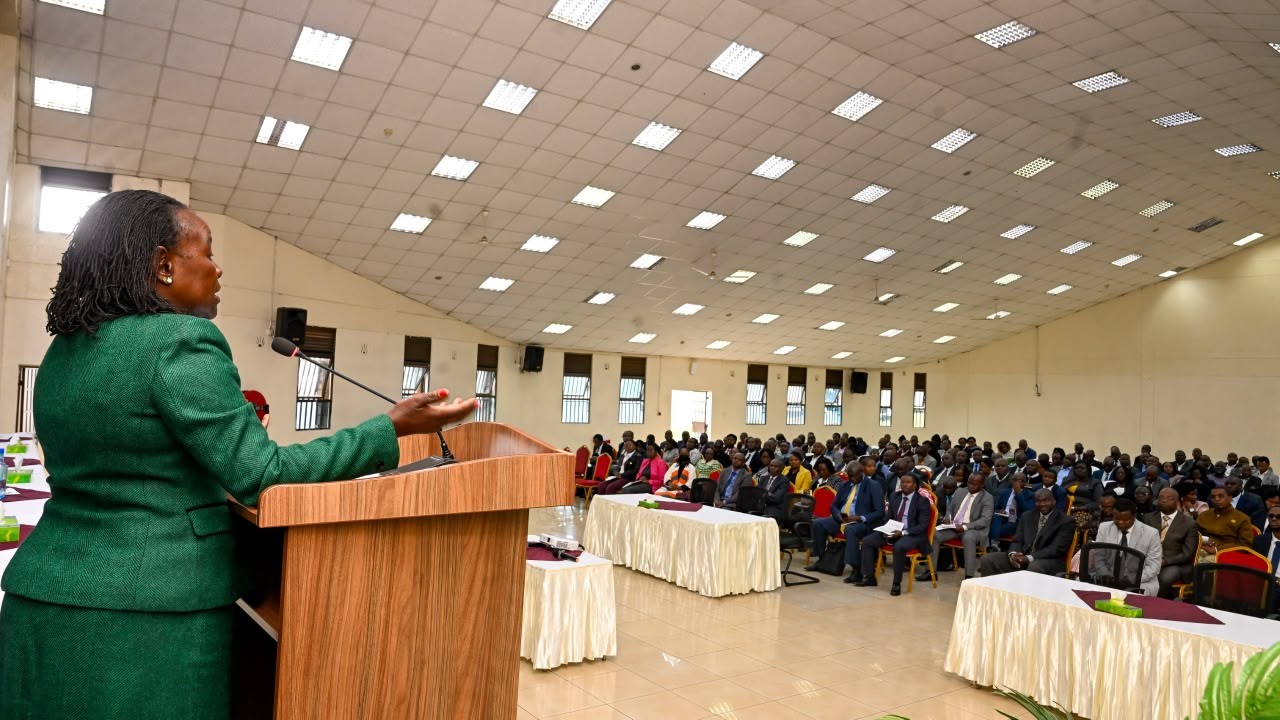
That simple question set the tone when principals of public TVET institutions gathered at Kenya School of TVET in Nairobi on 2nd and 3rd November 2026 for their quarterly meeting. A blunt tool still cuts, but it takes more effort and leaves a rougher result. The same is true of a training system.
For three years, Kenya has been implementing Competency-Based Education and Training (CBET), an approach built on one idea: a trainee should be able to do the job, and prove it. The meeting was a chance to ask honestly what has worked, what has not, and how to move forward together.
Quality is as important as growth
Opening the meeting, Principal Secretary Dr. Esther Muoria made the message plain: quality is as important as expansion. The country is working toward the presidential directive of more than 2 million trainees in TVET institutions. Numbers alone will not win the confidence of parents, employers and young people. Reputation is earned through demonstrable competence, one graduate at a time.
Every institution has a part in that target. National Polytechnics are expected to enroll 20,000 trainees, Technical Training Institutes and Institutes of Science and Technology 10,000, and Technical and Vocational Colleges 6,000. The challenge is to reach those figures without letting standards slip.
Training For, From and With industry
The strongest thread running through the meeting was the partnership between institutions and industry. Dual training, where learning moves between the classroom and the workplace, is one of the anchors of competence-based training. It works only when industry helps shape the curriculum and takes part in the training itself, in practical instruction, internships and joint assessment.
The partnership between Kiambu National Polytechnic and Naivas Supermarket was presented as an example of what this looks like in practice. The partnership focuses on aligning vocational curricula with modern retail standards, particularly in specialised fresh-food departments such as bakery and deli operations. The aim is that what trainees learn in the workshop matches what a modern retailer expects on the shop floor.
The meeting also asked that agreements with industry deliver measurable results. A signed MOU is a beginning, and the real test is what trainees gain from it.
Credible assessment and trainers who keep learning
A certificate is worth only what stands behind it. The meeting stressed that assessment must remain credible, with industry experts involved in developing, moderating, validating and marking assessment tools. Trainees who complete their requirements should be certified promptly.
Trainers are the other half of the equation. Skills change quickly, and a trainer who stops learning cannot keep a trainee current. Institutions were encouraged to budget for industrial attachments, continuing professional development and training on modern equipment. In other words, the people who sharpen the trainees must sharpen themselves too.
Opening doors for every trainee
A sharper system also means clearer pathways. TVET CDACC, working with the qualification awarding bodies, will lead a multi-stakeholder review of the modular curriculum. It will look at stackable qualifications, flexible progression routes, green skills and the skills of the future, so that a trainee's learning builds step by step and does not end at a dead end.
Digital opportunity is part of the picture. Principals were urged to make Jitume labs hubs where young people train for online jobs, turning a computer lab into a doorway to work from anywhere. Institutions will also keep verified graduate databases to support eligible graduates who seek opportunities in foreign labour markets.
And for those who already have the skills but lack the paper, Recognition of Prior Learning offers a route to certification without having to start again.
From training centres to production hubs
Institutions were urged to become production hubs. Workshops, machines and the skills of trainers and trainees can make products and offer services that earn income. A "make before buying" approach asks institutions to use their own expertise to build what they need before going to the market, and to put idle equipment to work.
Income-generating activities are more than a funding strategy. When a trainee sees an institution plan, produce and sell, they are learning to think like an entrepreneur, which is part of what competence means.
Sustainability runs alongside this. Greening of the curriculum has been under way for three years, and the meeting was clear that more can be done: solar-powered workshops, energy-efficient technologies, rainwater harvesting, sustainable agriculture and green skills built into training modules.
What the quality data tells us
TVETA's quality audits give the clearest picture so far. They score institutions against seven criteria, from training delivery and human resources to physical resources and governance. Results for the last two audit years, 2024/25 and 2025/26, were shared with principals.
Public Technical and Vocational Colleges (TVCs) improved their overall score from 65% to 67%, moving from the "above average" band into "good". National Polytechnics moved the other way, from 78% to 68%, a drop of ten percentage points that took them from "excellent" to "good". Two groups that were 13 points apart are now within a single point of each other.
Behind the public TVC gain are practical changes. Accredited courses rose from 63% to 80%, training delivery from 75% to 82%, and verification of assessments from 43% to 66%. For National Polytechnics, the audit points to areas worth attention, such as programme evaluation and workplace attachment policies.
The 2025/26 round covered five National Polytechnics, against 15 the year before, so the comparison is best read as a signal and not a verdict. The signal is still clear: quality is not a rank an institution holds forever. It is earned again each year.
One participant put it simply: the meeting was captivating, and seeing TVCs improve was a reminder that every institution can get better. That attitude, honest about the gaps and confident that they can be closed, is the one this sector needs.
Sharpening the tools, together
No institution can do this alone. Transformation through CBET depends on trainers, principals, boards, regulators, industry partners and communities building together. If you run a business, you can offer a workplace, expertise or an assessor. If you train, you can share what is working in your workshop. If you lead an institution, you can ask what one tool in your own kit needs sharpening this term.
So, to return to the question: how often do you sharpen your tools of work?